
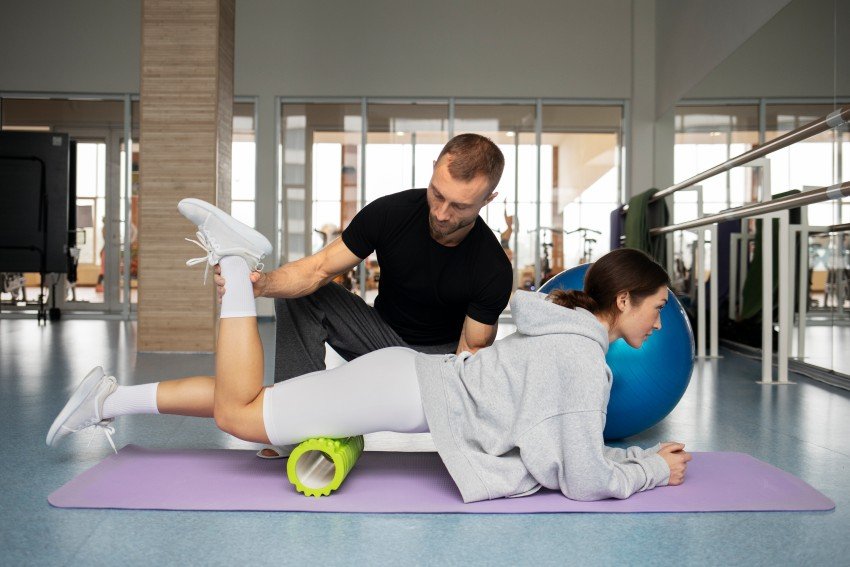
As we grow older, maintaining good balance becomes increasingly important for safe walking, everyday movement, and independence. Muscle weakness, joint stiffness, vision changes, previous injuries, or neurological conditions can affect stability and increase the risk of falls. Working with a Balance training physiotherapist in Crossing Republic can help seniors identify balance difficulties and follow a structured program designed around their individual needs. Balance training is not simply about standing on one leg. It involves improving strength, coordination, posture, flexibility, reaction time, and confidence during movement. With appropriate assessment and supervised exercises, seniors can work toward safer and more controlled daily activities.
For more information, direct chat with us on WhatsApp
Balance training physiotherapy helps seniors improve stability, coordination, lower-body strength, and confidence during movement. Dr. Preksha Singh first assesses balance and mobility before creating an individualized exercise program. Regular training may help seniors perform daily activities more safely and reduce fall risk while supporting greater mobility and independence.
Why Does Balance Become More Difficult With Age?
Balance depends on several systems working together. Your eyes provide information about your surroundings, your inner ear helps detect movement and position, and your muscles and joints provide feedback about body position.
With age, changes in any of these systems can affect stability. Seniors may also experience:
- Reduced leg and core strength
- Stiffness in the hips, knees, or ankles
- Slower reaction times
- Changes in walking patterns
- Reduced flexibility
- Vision or vestibular problems
- Effects of previous falls or injuries
- Neurological or musculoskeletal conditions
As a result, activities such as getting out of a chair, climbing stairs, turning quickly, or walking on uneven surfaces may become more challenging.
How Can a Balance Training Physiotherapist in Crossing Republic Help?
A qualified Balance training physiotherapist in Crossing Republic can begin with a comprehensive functional assessment. The assessment may examine walking ability, lower-body strength, posture, coordination, flexibility, mobility, and the person’s ability to maintain balance during different activities.
The physiotherapist can then develop an exercise program based on the senior’s current abilities, medical history, goals, and safety needs.
Importantly, not every balance problem requires the same exercises. Someone recovering from a joint injury may need a different approach from a person dealing with age-related weakness or a neurological condition.
Balance Training Physiotherapist in Crossing Republic: What May Be Included?
A personalized balance rehabilitation program can include several types of exercises.
1. Lower-body strengthening
Strong legs help support the body during walking, standing, and transfers. Exercises may target the quadriceps, hamstrings, glutes, and calf muscles.
2. Core stability exercises
The abdominal and back muscles contribute to postural control. Improving core strength can help seniors maintain a more stable position during movement.
3. Static balance exercises
These exercises involve maintaining a controlled position while standing. The difficulty can gradually increase as the person’s ability improves.
4. Dynamic balance training
Daily life requires movement rather than simply standing still. Dynamic exercises may involve stepping, turning, reaching, changing direction, or navigating around objects.
5. Gait and walking training
A physiotherapist can assess walking patterns and work on stride, foot placement, turning, and safe movement strategies where appropriate.
6. Functional exercises
Training can replicate everyday activities such as sitting down, standing up, stepping onto a low platform, or reaching for an object.
Benefits of Balance Training for Seniors
Regular, appropriately prescribed balance exercises can support several aspects of physical function.
Better Stability During Everyday Activities
Improved postural control can make activities such as standing, walking, and changing positions feel more manageable.
Improved Strength and Mobility
Balance programs often combine stability exercises with strengthening and mobility work. This combination can support functional movement rather than focusing on balance alone.
Greater Confidence
After experiencing a fall or near-fall, some seniors become nervous about moving. This fear may lead to reduced activity, which can contribute to further weakness. Gradual, supervised rehabilitation can help rebuild movement confidence.
Support for Fall Prevention
Falls have multiple causes, so no exercise program can guarantee that a person will never fall. However, addressing modifiable factors such as weakness, mobility limitations, and balance difficulties can form an important part of a broader fall-prevention strategy.
Greater Independence
Being able to walk safely, get out of bed, use stairs, and perform household activities can help seniors remain more independent in daily life.
Who May Benefit From Balance Physiotherapy?
Balance rehabilitation may be useful for seniors experiencing:
- Frequent unsteadiness while walking
- Difficulty getting up from a chair
- Repeated trips or near-falls
- Reduced confidence when using stairs
- Weakness after a period of inactivity
- Balance difficulties following an injury
- Mobility limitations associated with joint problems
- Recovery needs after certain neurological conditions
However, persistent or sudden balance changes should not automatically be attributed to ageing.
Sudden dizziness, fainting, new weakness, severe headache, difficulty speaking, chest pain, or sudden changes in vision require prompt medical evaluation. A physiotherapist can support rehabilitation, but underlying medical causes should be assessed by an appropriate healthcare professional.
How to Make Balance Exercises Safer at Home
Home exercises can be useful when a physiotherapist has assessed the person and recommended suitable activities. Safety should always come first.
Consider these practical measures:
- Exercise near a stable support when advised.
- Wear comfortable, secure footwear.
- Keep floors free from loose rugs and clutter.
- Ensure rooms and stairways have adequate lighting.
- Avoid performing challenging exercises when alone if supervision is recommended.
- Follow the prescribed repetitions rather than pushing through excessive fatigue.
- Stop an exercise if it causes unusual pain, severe dizziness, or significant symptoms.
A physiotherapist can also help families identify environmental hazards that may contribute to falls.
Why Individualized Training Matters
A common mistake is assuming that one set of balance exercises works for every senior. Balance ability varies considerably from person to person.
For example, an active older adult with mild instability may need progressive strengthening and dynamic balance exercises. Another person with significant weakness may initially need simpler movements and close supervision.
Therefore, assessment should guide exercise selection. The program can then progress gradually as strength, coordination, mobility, and confidence improve.
When Should a Senior Consider Physiotherapy?
Consider a professional assessment if balance difficulties are affecting daily activities, walking confidence, or independence. It is especially worthwhile after a fall, injury, prolonged inactivity, or noticeable decline in mobility.
Early attention can help identify contributing factors and establish realistic rehabilitation goals. Moreover, supervised training can provide seniors and their families with practical strategies for exercising safely.
If you live in or around Crossing Republic, Ghaziabad, consulting a qualified physiotherapist can make it easier to access individualized balance and mobility rehabilitation close to home.
Conclusion
Good balance plays an important role in helping seniors walk safely, move confidently, and maintain independence. Strength, coordination, posture, flexibility, and functional movement all contribute to better stability. Rather than relying on generic exercises, seniors can benefit from an individualized assessment and progressive rehabilitation plan. A Balance training physiotherapist in Crossing Republic can evaluate movement limitations and recommend appropriate exercises based on the person’s abilities and goals. If you or an older family member is experiencing unsteadiness, repeated near-falls, or reduced confidence while walking, consider arranging a professional physiotherapy assessment. Early guidance can help support safer movement and a more active daily life.