
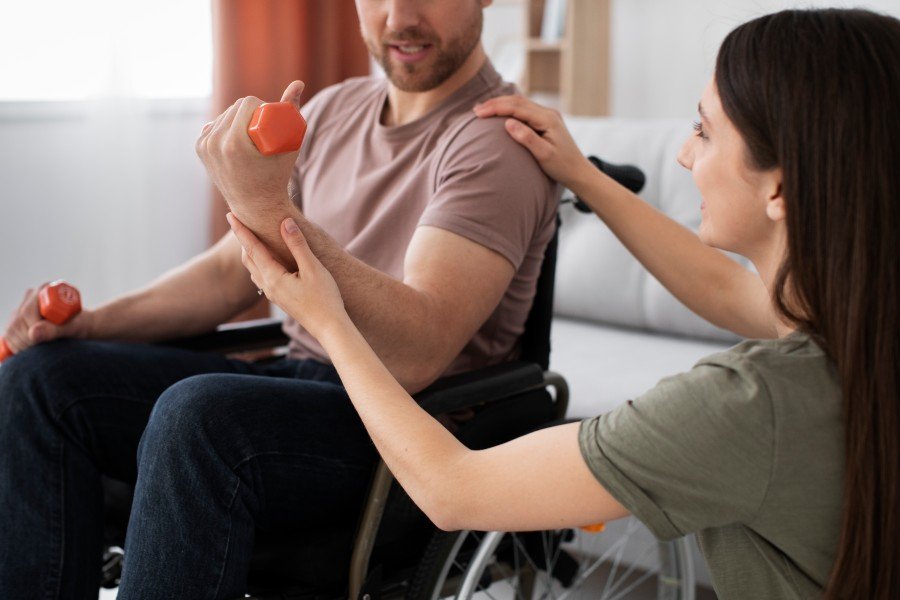
Paralysis can affect movement, balance, coordination, strength, and everyday independence. Whether it follows a stroke, spinal cord injury, brain injury, or another neurological condition, rehabilitation often plays an important role in helping a person work toward their individual functional goals. For patients who find travelling difficult, paralysis physiotherapy at home Gaur City can provide rehabilitation in a familiar and convenient environment. Home-based physiotherapy also allows exercises and mobility training to be adapted to the person’s living space and current abilities. However, treatment should always be based on a proper assessment by a qualified physiotherapist and, when necessary, coordinated with the patient’s medical team.
For more information, direct chat with us on WhatsApp
Paralysis physiotherapy at home in Gaur City involves individualized exercises and rehabilitation techniques designed to improve movement, strength, balance, coordination, and daily function. A physiotherapist assesses the patient’s condition and creates a suitable plan that may include mobility training, positioning, strengthening, stretching, and functional exercises.
What Is Paralysis Physiotherapy?
Paralysis physiotherapy is a rehabilitation approach for people who have reduced or lost movement in one or more parts of the body. The extent of paralysis varies considerably, so treatment cannot follow one standard routine for everyone.
A physiotherapist first considers factors such as muscle strength, joint movement, balance, posture, coordination, walking ability, and the person’s capacity to perform daily activities. The rehabilitation programme is then adjusted according to these findings.
Depending on the underlying condition and stage of recovery, therapy may focus on:
- Improving functional movement
- Maintaining joint flexibility
- Building or preserving muscle strength
- Improving balance and coordination
- Practising sitting, standing, or walking
- Developing safer transfer techniques
- Reducing complications associated with prolonged inactivity
- Supporting greater independence in daily activities
The aim is not simply to exercise a weak limb. Good neurological rehabilitation focuses on meaningful movements and practical tasks that relate to the patient’s everyday life.
Why Consider Physiotherapy at Home in Gaur City?
Travelling to a clinic can be challenging for someone with significant weakness or mobility limitations. Getting into a vehicle, navigating stairs, or managing a wheelchair may require considerable assistance.
Home physiotherapy can remove some of these practical barriers. The therapist can work with the patient in their own environment and observe how they manage everyday movements.
A Familiar Rehabilitation Environment
Patients may feel more comfortable exercising at home. The physiotherapist can also consider the actual surroundings while teaching safe movement strategies.
For example, therapy may address how a patient gets out of bed, moves between a chair and bed, uses the bathroom, or walks through different areas of the home.
Individualized Attention
A home programme can be adjusted according to the person’s current ability, fatigue level, medical history, and rehabilitation goals. Exercises that are appropriate for one patient may not be suitable for another.
Family or Caregiver Involvement
Where appropriate, caregivers can learn safe ways to assist with positioning, transfers, prescribed exercises, and mobility. This can help create greater consistency between therapy sessions.
What Can Paralysis Physiotherapy at Home Gaur City Include?
The exact programme depends on the patient’s diagnosis and assessment. Common components may include:
Mobility and Functional Training
A physiotherapist may practise movements such as rolling in bed, sitting up, standing, transferring between surfaces, and walking when appropriate.
These activities can be progressed gradually as the patient’s control and confidence improve.
Strength and Flexibility Exercises
Specific exercises may help maintain available muscle strength and joint mobility. Stretching and positioning may also be used when reduced movement creates a risk of stiffness.
Balance and Coordination Training
Neurological conditions can affect postural control and coordination. Therapy may therefore include carefully supervised balance activities based on the patient’s abilities and safety needs.
Gait Training
For patients who can stand or walk, physiotherapy may include gait-related exercises. Depending on the assessment, a therapist may work on weight shifting, stepping, walking technique, and appropriate use of mobility aids.
Positioning and Transfer Education
Correct positioning can be particularly important for people who spend extended periods in bed or a chair. A therapist may also teach safer techniques for moving between a bed, chair, wheelchair, or other surfaces.
When Should Rehabilitation Begin?
The appropriate time to begin physiotherapy depends on the underlying medical condition and the person’s clinical status. After an acute event such as a stroke or serious injury, rehabilitation is often introduced as soon as the medical team considers it safe and appropriate.
Importantly, patients should not start intensive exercises independently simply because they want to recover faster. The type, intensity, and progression of exercise should match their condition.
Early professional assessment can help identify realistic rehabilitation goals and determine which activities are safe at each stage.
How Can Family Members Support Recovery?
Family involvement can be valuable, but caregivers should avoid forcing movements or creating an unsupervised exercise routine.
Useful support may include:
- Helping maintain the exercise schedule recommended by the therapist
- Keeping frequently used items within safe reach
- Following instructions for transfers and positioning
- Encouraging appropriate physical activity without overexertion
- Reporting new symptoms or significant changes to the healthcare team
- Making the home environment safer for mobility
A supportive environment should encourage independence while still providing appropriate assistance.
How to Choose a Home Physiotherapy Service in Gaur City
When looking for paralysis physiotherapy at home Gaur City, consider the therapist’s experience with neurological rehabilitation and their approach to individualized care.
Ask whether the assessment will cover mobility, balance, strength, functional activities, and the patient’s specific rehabilitation goals. It is also useful to understand how progress will be monitored and when the treatment plan may be adjusted.
Most importantly, choose professional care that prioritizes patient safety rather than promising a guaranteed recovery timeline.
Safety Considerations During Paralysis Rehabilitation
Safety should remain central throughout home-based rehabilitation. Patients with significant weakness, impaired balance, dizziness, reduced sensation, or other neurological symptoms may require close supervision during movement.
Do not continue an exercise if it causes unusual or severe pain, significant dizziness, breathing difficulty, chest discomfort, or a sudden deterioration in function. New or sudden neurological symptoms require urgent medical evaluation rather than routine physiotherapy.
Physiotherapy complements medical care; it does not replace diagnosis, emergency treatment, or specialist management of the underlying condition.
Paralysis physiotherapy at home in Gaur City involves individualized exercises and rehabilitation techniques designed to improve movement, strength, balance, coordination, and daily function. A physiotherapist assesses the patient’s condition and creates a suitable plan that may include mobility training, positioning, strengthening, stretching, and functional exercises.
5 FAQs
What is paralysis physiotherapy at home?
Paralysis physiotherapy at home is rehabilitation provided in the patient’s home after an assessment by a qualified physiotherapist. Treatment may include mobility exercises, strengthening, stretching, balance training, transfer practice, positioning, and functional activities. The programme depends on the patient’s diagnosis, abilities, medical status, and rehabilitation goals.
Can physiotherapy help someone recover movement after a stroke?
Physiotherapy can support recovery of movement and function after a stroke, although results vary significantly between individuals. Treatment may focus on balance, transfers, walking, coordination, strength, and everyday activities. A physiotherapist works according to the person’s abilities and progresses exercises as safely and appropriately as possible.
Is home physiotherapy suitable for patients with severe paralysis?
Home physiotherapy may be appropriate for some patients with severe paralysis, particularly when travelling is difficult, but treatment must be individualized. The physiotherapist should assess mobility, medical status, positioning needs, caregiver support, and safety before recommending exercises or functional activities.
How often should paralysis physiotherapy be done?
The appropriate frequency varies according to the patient’s condition, rehabilitation stage, tolerance, and goals. A physiotherapist may recommend a combination of supervised sessions and a prescribed home exercise programme. Consistency is important, but exercising more frequently or intensely is not necessarily better and can lead to excessive fatigue or injury.
How do I choose paralysis physiotherapy at home in Gaur City?
Look for a qualified physiotherapist with relevant experience in neurological rehabilitation and home-based care. Ask about the initial assessment, treatment approach, safety measures, progress monitoring, and communication with caregivers or other healthcare professionals. A good programme should be individualized rather than based on a fixed exercise routine.
Conclusion
Paralysis rehabilitation is a gradual process that should be guided by the patient’s condition, functional abilities, and individual goals. Consistent, appropriately prescribed therapy can help address movement, balance, flexibility, strength, transfers, and everyday activities while supporting safer participation at home. For people who have difficulty travelling to a clinic, paralysis physiotherapy at home Gaur City can make supervised rehabilitation more accessible and practical. Before beginning exercises, patients should receive an appropriate assessment from PhysioFlex and follow medical advice related to their underlying condition. If you are considering home-based rehabilitation, the next step is to discuss the patient’s needs with a professional and develop a safe, individualized therapy plan.